A Reading Guide
10 Underrated Sapphic Books
Hidden gems worth reading — for anyone who has finished the usual list.
What "underrated" means here
A word about what "underrated" means on this page, because it matters. These are not books nobody has heard of. If the bar were pure obscurity we'd end up recommending novels with six Goodreads ratings and no way on earth of knowing whether they're any good — which is a fun premise for an article and a poor one for a reader.
These are books that deserve considerably more attention than they receive. Some were enormous in their own moment and have simply fallen out of circulation. Some came from small presses that never got front-of-store space. Some are widely respected and almost never actually recommended.
The rule for this list: if it routinely appears on "best sapphic books" round-ups, it isn't eligible. No Waters, no Carmilla, no Priory, no Jasmine Throne. They're wonderful. They also do not need the help.
What's left is older fiction, small-press fiction, and a few genuinely good books that fell through the gap between literary shelves and genre shelves. Ten of them, in no particular order.
Some links below go to Amazon and may earn a small commission at no extra cost to you. Nothing on this list was chosen for that reason — several of these are easier to find secondhand or through your library than new.
The ten
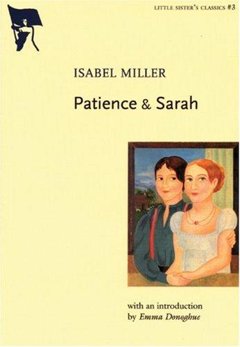
1. Patience & Sarah — Isabel Miller (1969)
Historical · Romance · American
Two women in 1816 Connecticut — a farmer's daughter and a self-taught painter — decide, with astonishing practicality, to buy land and live together. It is warm, plain-spoken and quietly radical, and it invented a great deal of what historical sapphic romance now does by default.
Why it's overlooked: Miller first published it herself, under a pseudonym, and sold copies by hand outside bookshops. It won the first Stonewall Book Award and then slid out of the recommendation cycle almost entirely.
Find on Amazon →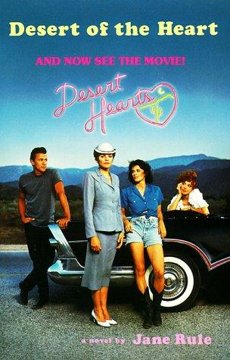
2. Desert of the Heart — Jane Rule (1964)
Literary · Midcentury · Romance
A university professor arrives in Reno to wait out a divorce and falls, against every instinct she has, for a much younger woman working the casino floor. Rule writes desire as an argument the intellect keeps losing, and the Nevada landscape does half the emotional work.
Why it's overlooked: It was one of the very few midcentury lesbian novels to end without punishment, and the 1985 film adaptation has largely eclipsed the book that made it possible.
Find on Amazon →
3. Curious Wine — Katherine V. Forrest (1983)
Romance · Small press · Contemporary classic
A cabin at Lake Tahoe, a card game, too much wine, and two women who did not arrive expecting anything. It is a straightforwardly tender romance, and for an entire generation of readers it was the first one that treated a sapphic love story as simply a love story.
Why it's overlooked: Published by Naiad Press, it sold in the hundreds of thousands almost entirely outside mainstream distribution — which is precisely why it rarely appears on lists compiled from mainstream catalogues.
Find on Amazon →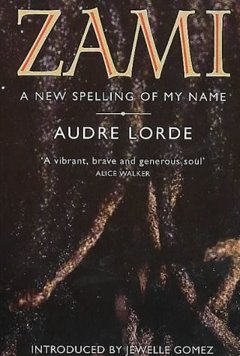
4. Zami: A New Spelling of My Name — Audre Lorde (1982)
Memoir · Literary · Biomythography
Lorde called it a biomythography, which is the only honest word for it: a life story told with the licence of myth. Growing up Black and Caribbean in Harlem, the Greenwich Village bar scene of the fifties, the women who formed her. The prose is extraordinary.
Why it's overlooked: Lorde is quoted constantly and read considerably less. Zami is one of the great sapphic books of the twentieth century and it turns up almost exclusively on syllabi, never on reading lists.
Find on Amazon →5. The Passion — Jeanette Winterson (1987)
Historical · Fabulist · Napoleonic
Napoleon's chicken cook and a web-footed Venetian woman who gambles with her own heart — literally. A short, strange, gorgeous novel about obsession and the weather of wanting someone, with one of the best sapphic love stories in British fiction folded inside it.
Why it's overlooked: Winterson's debut absorbed all the attention and kept it. The Passion is the better novel and is almost never the one recommended.
Find on Amazon →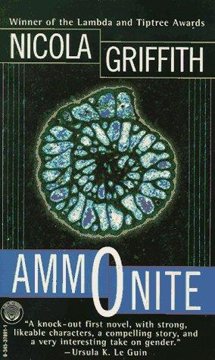
6. Ammonite — Nicola Griffith (1993)
Science fiction · Anthropological
A virus has killed every man on the planet Jeep and the women who survived have built something entirely their own. An anthropologist arrives to study them and is slowly, irreversibly changed. Rigorous, cold-weather, deeply physical science fiction.
Why it's overlooked: It won both the Otherwise and Lambda awards and still gets passed over in favour of the last three years of romantasy whenever anyone asks for sapphic SF.
Find on Amazon →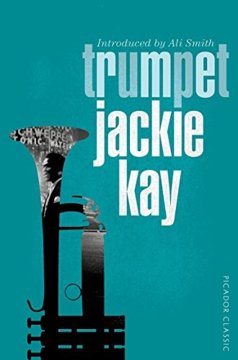
7. Trumpet — Jackie Kay (1998)
Literary · Scottish · Family
A celebrated jazz trumpeter dies and the world discovers he was assigned female at birth. Kay tells it through his widow Millie, whose love was never in any doubt, and their son, whose grief is furious. The chapter in Millie's voice is one of the finest things in modern Scottish fiction.
Why it's overlooked: It's a queer novel that resists every category a recommendation list wants to file it under, so it tends not to get filed at all.
Find on Amazon →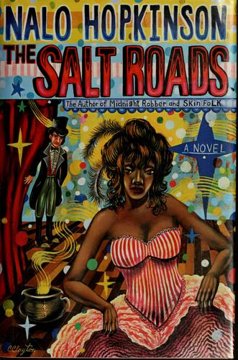
8. The Salt Roads — Nalo Hopkinson (2003)
Historical · Speculative · Diasporic
Three women across centuries — a plantation midwife in Saint-Domingue, Baudelaire's lover Jeanne Duval in Paris, a girl in fourth-century Egypt — joined by a goddess who moves between them. Sensual, furious, formally daring, and unmistakably queer throughout.
Why it's overlooked: Hopkinson is a giant of speculative fiction and this is her most ambitious book. It requires a reader's full attention, which is usually enough to keep a novel off a listicle.
Find on Amazon →
9. Cantoras — Carolina De Robertis (2019)
Historical · Literary · Uruguay
Under the Uruguayan dictatorship, five queer women find a shack on a remote stretch of coast and return to it for thirty-five years. The book follows all five across decades — love, betrayal, exile, endurance — and refuses to reduce any of them to a role.
Why it's overlooked: It's a recent novel that reads like a classic and got the reviews to match, then quietly vanished from the sapphic recommendation ecosystem within about a year.
Find on Amazon →10. The Scapegracers — H. A. Clarke (2020)
YA · Witchy · Small press
A lesbian outcast is hired to do a party trick at the popular girls' Halloween party, the magic turns out to be real, and the four of them become something considerably sharper than a friend group. The voice is feral and funny and does not condescend to anybody.
Why it's overlooked: Published by a small independent press, so it never got the front-of-store push that carried far tamer sapphic YA onto every list going.
Find on Amazon →
A disclosure, cheerfully made
Looking for something genuinely under the radar?
This next part is mine, and I'm not going to pretend otherwise by slipping it in at number eleven. I write the Laura and Maya novels, and this is my site.
But it belongs here for a reason. If you've reached the point where you've read the usual sapphic recommendations and want something considerably further off the beaten track, that's more or less why I write these books: standalone novels connected by two recurring women, scattered across a university campus, the Ice Age, a Carpathian castle and a 1950s pulp magazine. They are not on anybody's list. They are, in the most literal sense, under the radar.
If the books above appealed to you, the one to start with is Laura Chambers Is the Apocalypse in a Sweater — a slow-burn campus romance that begins at a library table with a borrowed chair.
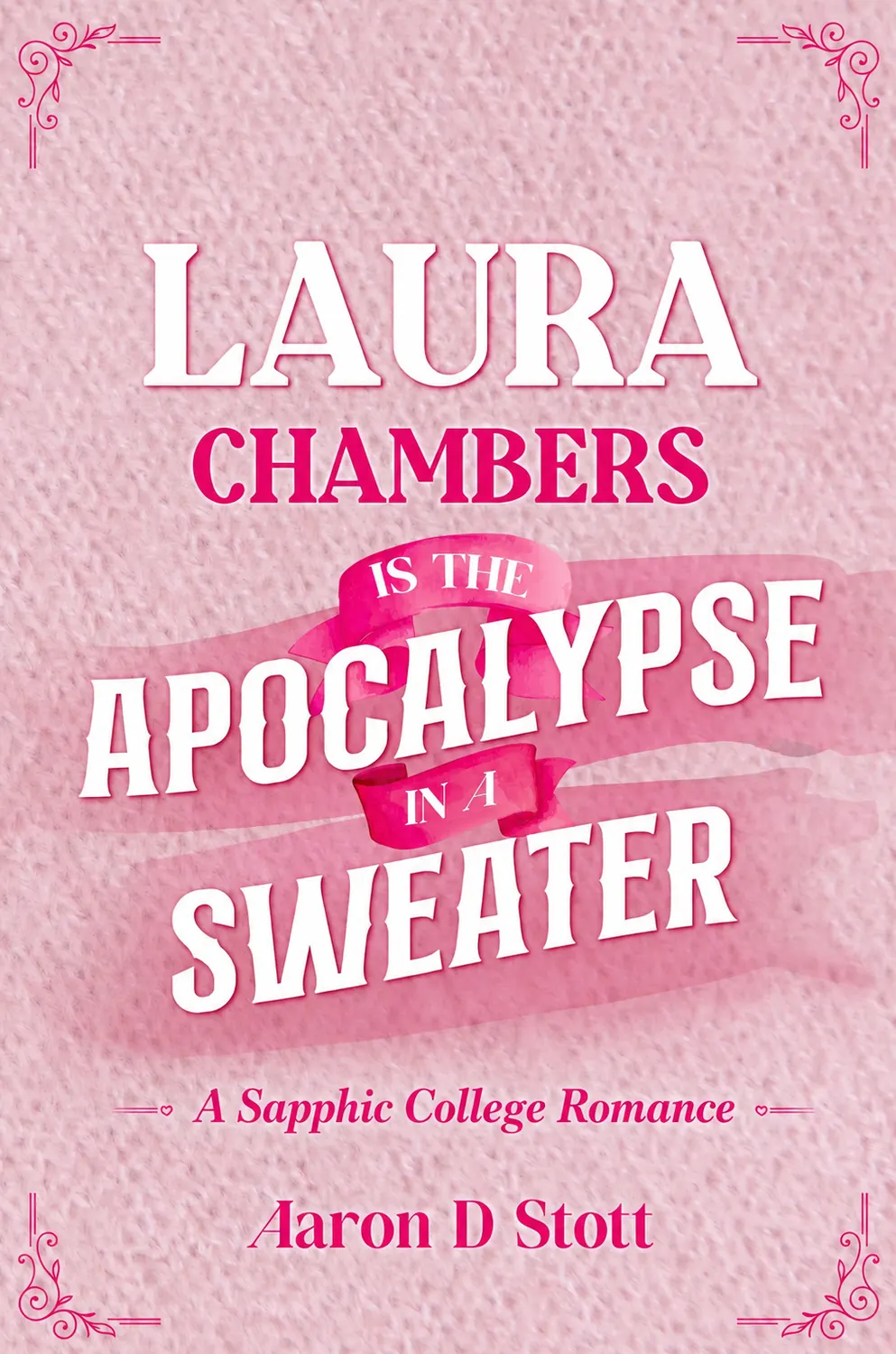
Laura Chambers Is the Apocalypse in a Sweater
A quiet archaeology student, a disruptive urban planner, and a library table that becomes the beginning of everything.
Laura Chambers Is the Apocalypse in a Sweater
by Aaron D. Stott
A quiet archaeology student, a disruptive urban planner, and a library table that becomes the beginning of everything.
Read the first chapter →"A book doesn't stop being good because the algorithm stopped mentioning it."
— Aaron D. Stott