Essay
The Ladies of Llangollen
Two Irishwomen, one Welsh cottage, and fifty years of a life nobody was supposed to be allowed to have.
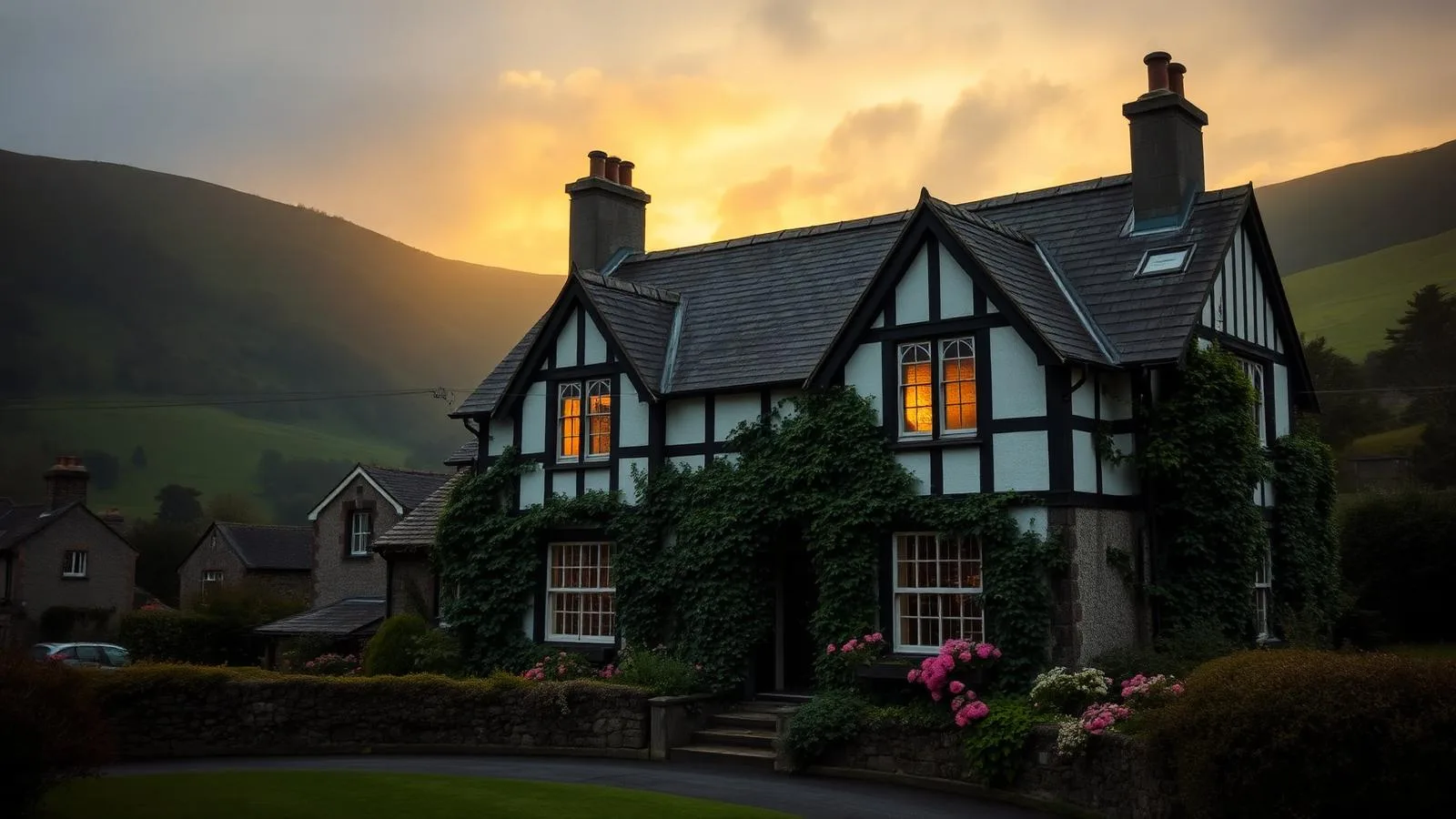
In the spring of 1778, two women climbed out of a window in County Kilkenny with a pistol, a maid, and enough money to reach a boat. Eleanor Butler was thirty-nine. Sarah Ponsonby was twenty-three. They had been caught trying to leave once already, and had been dragged back to families who wanted Eleanor sent to a convent and Sarah married off. On the second attempt they got as far as Wales, and once they were in Wales, nobody ever quite managed to bring them home.
They settled in a small Welsh town called Llangollen, in a cottage they renamed Plas Newydd — "new place" — and proceeded, with a quiet stubbornness that lasted the rest of their lives, to be together.
Disclosure: As an Amazon Associate I earn from qualifying purchases made through links on this page.
The life they built
The cottage was tiny to begin with, and they spent decades Gothicising it: pointed windows, dark oak panelling scavenged from local churches, stained glass, a library that eventually held over a thousand books. They studied Italian and Spanish together. They kept dairy cows and a very serious herb garden. They walked in matching riding habits — top hats, powdered hair, starched cravats — and their neighbours, after a period of adjustment, simply accepted this as the local fashion.
They wrote in a shared journal. They slept in the same bed for fifty-one years. When one of them was ill, the other one was frantic. When Eleanor went blind in old age, Sarah read to her every evening. Sarah outlived her by two years and asked to be buried in the same grave; she was.
What the world called them
What is remarkable, from a modern vantage, is not that they existed. It is that they were famous for existing. Plas Newydd became a stop on the Grand Tour of Britain. The Duke of Wellington visited. Sir Walter Scott visited. Wordsworth wrote them a (bad) sonnet. Queen Charlotte successfully lobbied the king to grant Eleanor a pension. Their correspondence swelled to fill drawers.
The public phrase for what they had was "romantic friendship," and Regency society clung to it with both hands. A romantic friendship was ardent, exclusive, physically affectionate, lifelong — and, by the definition the century needed to survive itself, chaste. It was the acceptable face of a thing that would otherwise have had to be named. The Ladies of Llangollen were the most visible, most respectable, most garlanded example the language of "romantic friendship" ever produced. They were also, almost certainly, something else.
The scandal that almost was
In 1790 a London newspaper, the General Evening Post, published a piece describing Eleanor as "tall and masculine" and hinting broadly that the arrangement at Plas Newydd was not quite what the visitors' book suggested. The Ladies were horrified. They enlisted Edmund Burke to help them consider a libel suit, then thought better of it: a libel suit would require them to state, in court, what they were being accused of. They chose silence.
That silence tells you almost everything. The accusation existed. It could be printed. It could be recognised by readers. And it could not be answered without collapsing the careful architecture of "friendship" that kept them safe. Anne Lister — the Yorkshire diarist whose coded journals we now read as one of the clearest first-person queer records of the period — visited the Ladies in 1822 and, in the privacy of her own cipher, was quite certain she recognised what she was looking at. She was not being told a new thing. She was being confirmed.
Why they matter to sapphic readers
The Ladies of Llangollen are one of the reasons queer historical fiction is possible as a genre. They are proof, in the archival record, that two women in the late eighteenth century could leave the plot their families had written for them, choose each other, be visible about it, and be celebrated for it — provided everyone agreed not to say a particular word. Every sapphic novel set between roughly 1780 and 1900 is, whether it knows it or not, in conversation with Plas Newydd.
They also complicate the easy modern narrative in which queer people in the past are always tragic. Eleanor and Sarah were not tragic. They were annoyed, occasionally, by their gardener. They had gout. They had opinions about the French Revolution. They lived, together, on their own terms, in a house they had made beautiful, for fifty-one years, and were buried side by side. If that is not a happy ending it is at minimum a durable one, which is more than most of us get.
Where to read more
The essential biography is Elizabeth Mavor's The Ladies of Llangollen: A Study in Romantic Friendship (1971), which reads the surviving journal entries and letters with real care. Fiona Brideoake's more recent The Ladies of Llangollen: Desire, Indeterminacy, and the Legacies of Criticism takes on the last half-century of arguments about what they were, and is very good on why the question keeps getting reopened. Anne Lister's own journals, published in Helena Whitbread's editions as I Know My Own Heart and No Priest but Love, give you the Regency queer world in the Ladies' immediate orbit, in a voice that will not let itself be softened.
They took the window. They took the boat. They took each other. The rest, eventually, they took by simply refusing to leave.